Last updated October 30, 2026
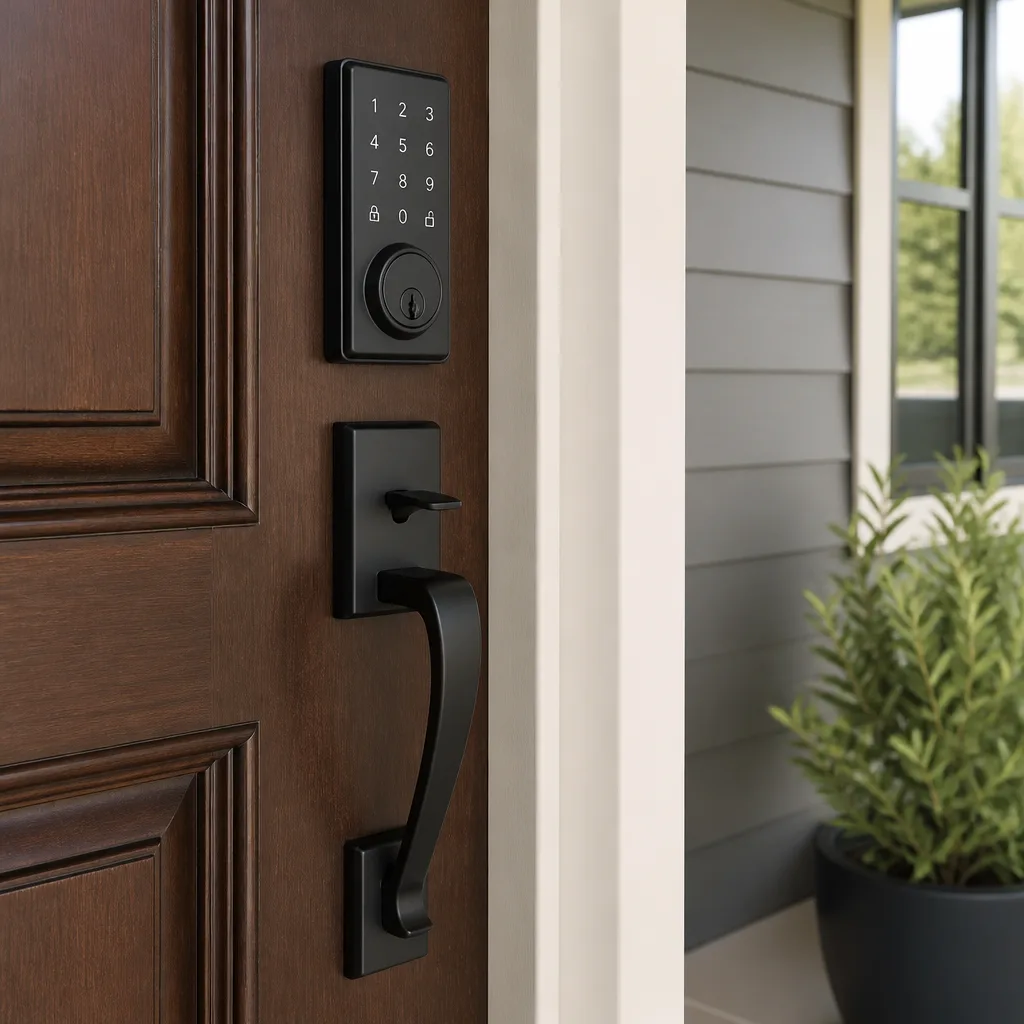 Smart locks
 House lockouts
 Re-keying
 Deadbolt upgrades
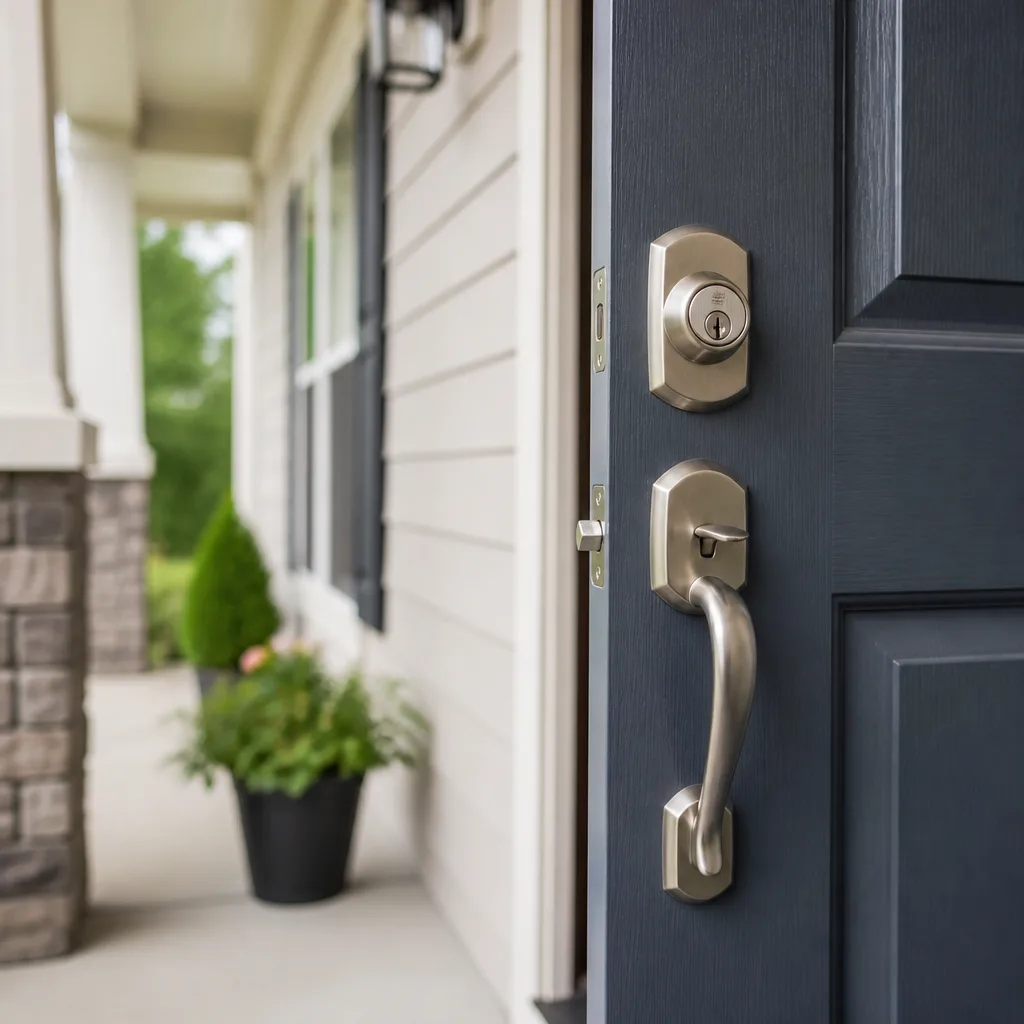
 Schlage
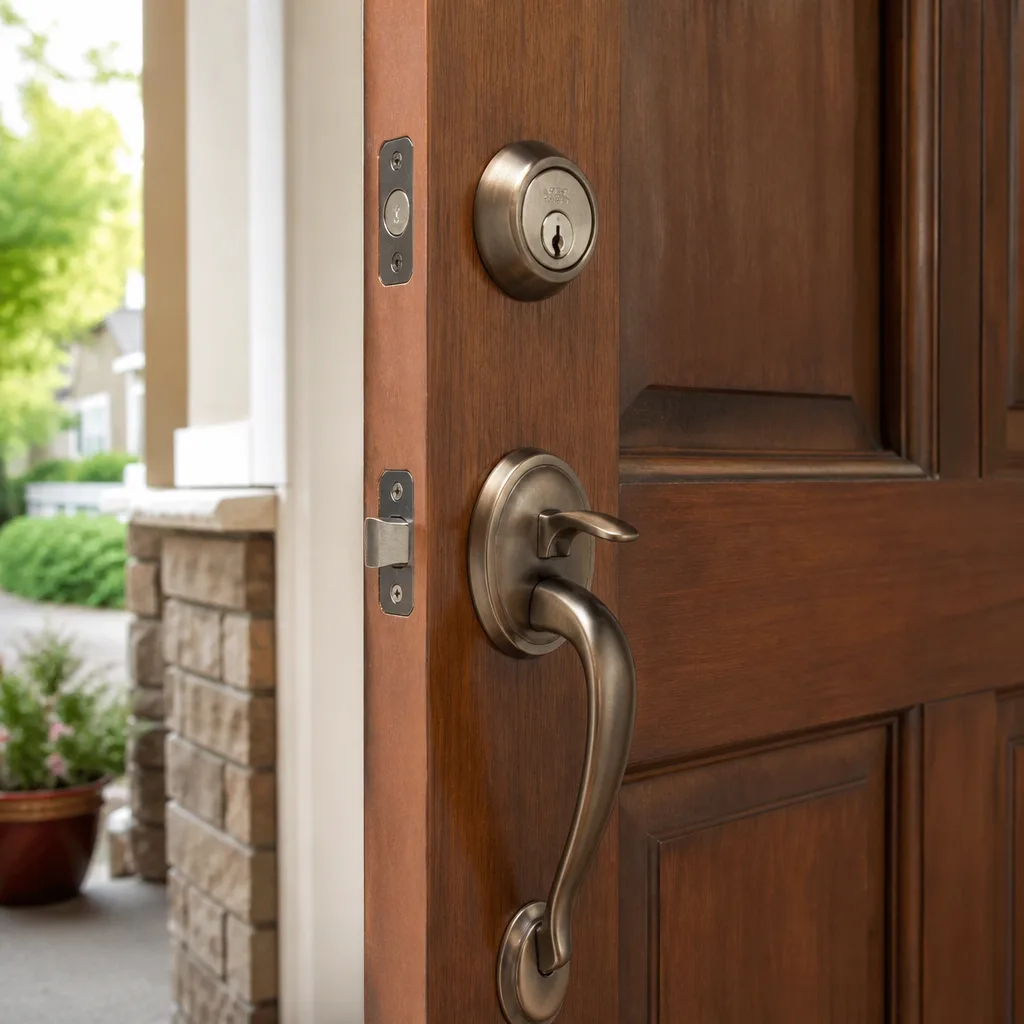
 Kwikset
 Car keys & fobs
Non-destructive entry first, always - and we re-key Schlage, Kwikset, and Baldwin locks on the spot while you watch
You get a price before we start. It does not change when we arrive. No surprises.
Get your free estimateLocksmith Warning Signs: A Bellevue Homeowner’s Reference Guide
A deadbolt that’s “a little sticky” and a quote that’s “just an estimate” are both warning signs people routinely ignore, until the first one fails on a rainy Bellevue night and the second one doubles at invoice. Neither has to catch you off guard. This guide walks through the physical, behavioral, and transactional red flags that show up long before a lock actually fails, a security gap becomes a problem, or a bad quote turns into a bad invoice. You’ll learn what to look for, when to act, and when to call a professional who knows the difference between a repair and a replacement.
Styles & brands we work with
Quick Answer
The most common warning signs you need a locksmith in Bellevue WA include key resistance or grinding in the cylinder, visible wear around the face plate, a deadbolt that no longer throws smoothly, and doors that have shifted enough to make the latch misalign with the strike plate. You should also watch for behavioral red flags from any locksmith you call: no marked vehicle, no written quote, or an immediate push to replace hardware that could be rekeyed or repaired. If you’re noticing any of these, a professional assessment now costs less than an emergency call later.
Table of Contents
- Physical Signs Your Lock Is Failing Before It Fails Completely
- Security Gaps That Look Fine on the Surface
- Behavioral Red Flags From the Locksmith Themselves
- Digital Warning Signs for Smart Lock Users
- When a Lockout Is a Symptom, Not Just a Bad Day
- Rekey vs. Replace: How to Know Which One You Actually Need
- Common Mistakes to Avoid
- When to Call a Professional
- Frequently Asked Questions
- The Bottom Line
Physical Signs Your Lock Is Failing Before It Fails Completely
Locks rarely fail without warning. They telegraph their decline through small, consistent signals that most people dismiss as quirks. In our experience across Bellevue’s housing stock, from 1970s ramblers in Lake Hills to newer builds in Issaquah Highlands, the same five physical symptoms show up again and again before a complete failure. Here is what to watch for.
Key resistance that gets worse over time. If your key needs a jiggle, a lift, or a specific angle to turn, the cylinder’s pin chambers are wearing, or debris has built up inside. A healthy lock accepts the key smoothly every time. Resistance that you can feel through the key is the lock telling you something internal has changed. Ignoring it turns a $25 rekey or cleaning into a full cylinder replacement, or worse, a key snapped off in the door at 10 p.m.
Visible wear on the face plate or collar. Look at the metal ring around the keyhole. If it’s scored, gouged, or shows tool marks from previous attempts, the lock has already taken damage. On Kwikset and Schlage hardware, common throughout Bellevue homes, that wear often precedes internal failure by months. The face plate is the lock’s first line of defense. When it is compromised, moisture and grit from Bellevue’s damp winters work their way inside the mechanism.
Wobble in the cylinder. Grasp the keyhole collar and try to move it side to side. Movement of more than a millimeter means the set screw or retaining clip inside has loosened. A loose cylinder will eventually rotate past its operating range and jam the lock entirely. This is especially common on Baldwin hardware, where the decorative collar hides what is actually a mechanical failure in progress.
A deadbolt that throws halfway. If the bolt extends only partially and then stops, the lock body and the strike plate are no longer aligned. Forcing the bolt only accelerates the damage. In Bellevue, seasonal expansion and contraction of wood doors and frames, thanks to wet winters and dry summers, shifts alignment enough to cause this exact failure. A locksmith can re-position the strike plate or adjust the door, usually in one visit.
Grinding or crunching sounds. A healthy lock is quiet. Grinding means metal particles inside the cylinder or gear mechanism, typically from a key that was cut slightly off-spec or from years of dust accumulation. Once those particles embed in the pins, the key stops working entirely. We see this regularly with older Medeco cylinders that have never been serviced.
None of these five symptoms fix themselves. They compound.
Security Gaps That Look Fine on the Surface
Some of the most serious security problems in Bellevue homes are invisible to casual inspection. The door looks solid, the deadbolt looks strong, and everything appears secure. But security is only as good as the weakest point in the system, and that weak point is often something homeowners never think to check.
Misaligned strike plates. The strike plate is the metal plate screwed into the door frame where the bolt or latch rests when closed. If the bolt only partially enters the strike plate, you are running on half-engagement. A firm shoulder shove can sometimes pop the door open. We have tested doors in Bellevue where the deadbolt engaged by less than a quarter inch. The door looked secure. It wasn’t.
Hollow-core doors with high-quality deadbolts. This combination is common in older Bellevue apartments and condos. A $200 Medeco deadbolt installed in a hollow-core door is wasted hardware. The door itself can be kicked through with less force than most people expect. If you’re upgrading locks on a hollow-core door, consider upgrading the door or reinforcing the area around the lock with a wrap plate. Otherwise you have premium security on a cardboard frame.
Sliding door vulnerabilities. Standard sliding glass doors lock with a small latch that is easy to bypass. Many Bellevue homes, especially those with backyard decks and patio access, rely on that factory latch as the only security. The fix is simple: a secondary blocking device, like a security bar or a pin lock, plus a screw added to the top track to prevent lifting. This is a $50 solution that closes a gap most homeowners do not know exists.
Short screws in the strike plate and hinges. Most builders install doors with screws that are three-quarters of an inch long. Those screws anchor into soft door-frame trim, not the structural stud behind it. Replacing them with three-inch screws costs pennies and dramatically increases kick-in resistance. This is one of the simplest security upgrades a homeowner can make, and one of the most overlooked.
Garage entry doors that do not match the front door. Many Bellevue homeowners invest heavily in front-door security and leave the side door from the garage protected by a basic Kwikset from 1998. A burglar looking for the path of least resistance will find that door first. The lock brand on every exterior door matters. If one door carries a high-security cylinder and the next carries a builder-grade lock, the system defaults to the weaker door.
Behavioral Red Flags From the Locksmith Themselves
The person you call is as important as the lock on your door. A bad locksmith experience rarely starts with outright fraud. It starts with small signals: a vague answer, a missing detail, a rushed recommendation. Learning to read those signals is a homeowner skill that pays for itself every time.
No marked vehicle. A legitimate locksmith business in Bellevue invests in marked vehicles. The branding is a trust signal and a business asset. A technician arriving in an unmarked personal car may be a subcontractor working on commission with no accountability to the company whose name you called. That is a red flag worth pausing over.
No written quote before work begins. Any reputable locksmith can give you a price range on the phone and a firm written quote after a quick look at the job. If the technician hesitates, deflects, or says they will “figure it out after,” you are about to see a bill that is larger than the original estimate. In locksmith work, as in any trade, the price should be clear before the work starts. Full price quoted on the phone and honored on the invoice. No surprises.
Immediate push to replace rather than repair. This is the single most common overcharge pattern in the locksmith trade. A cylinder that needs cleaning, rekeying, or a minor part replacement gets diagnosed as “worn out” and replaced with new hardware at three times the cost. Sometimes replacement is genuinely warranted. But if the recommendation comes before the technician has examined the lock closely, that is a sales pitch, not a diagnosis. A rekey is often the smartest security upgrade most people overlook, and a good locksmith will tell you when it is the better option.
Quoting “from $19” or similar teaser pricing. A legitimate service call in Bellevue cannot be done profitably for $19. That number exists to get a technician to your door, at which point the real pricing begins. Honest pricing uses ranges: “A typical rekey runs $150 to $300 depending on the number of locks and cylinders.” If the quote sounds too low to be true, it is a sales hook.
No credentials or brand knowledge. Ask the technician which lock brands they service. A skilled locksmith can answer instantly and specifically. Here at Belmont Lock & Key, the list starts with Schlage and Kwikset and extends through Medeco, Mul-T-Lock, Sargent, and Abloy. If the answer is vague, “Oh, all of them, sure,” and doesn’t include specifics, you are likely talking to someone without the training or tooling for high-security hardware. That matters even if your lock is basic, because it signals how the technician will approach the diagnostic process.
Digital Warning Signs for Smart Lock Users
Smart locks are the fastest-growing category in residential security, and Bellevue, with its high concentration of tech-industry homeowners, has embraced them faster than most markets. But smart locks fail differently than mechanical locks, and the warning signs are less familiar. A conventional lock tells you it is failing through physical resistance. A smart lock tells you through digital glitches.
Connectivity drops that become more frequent. A smart lock that loses Wi-Fi or Bluetooth connection occasionally is normal. One that drops off weekly, or requires a reset each time, is signaling hardware degradation in the radio module or battery contacts. The lock may still open with a key or a keypad code, but the smart features, remote access, audit logs, auto-lock timers, are quietly degrading. When the module fails completely, you are left with a very expensive standard deadbolt.
Firmware that will not update. Smart locks receive firmware updates that patch security vulnerabilities. If your lock repeatedly fails to install an update, or the manufacturer’s app flags the lock as “offline” or “unreachable,” the hardware is failing. A security device running outdated firmware is a known attack surface. This is not a theoretical concern. Security researchers have documented exploits against unpatched smart locks that allow unauthorized access without leaving physical evidence.
Keypad buttons requiring harder presses. The rubber membrane keypad on a smart lock wears out. Buttons that require double-presses, or that register intermittently, indicate the membrane or the underlying switch contacts are wearing. This is the smart-lock equivalent of key resistance in a mechanical lock, and it follows the same trajectory: gradual decline, then complete failure.
Battery drain patterns that change. A smart lock that once ran six months on four AA batteries and now drains them in three weeks has an internal problem, usually a short in the motor circuit or a failing capacitor. That drain will eventually kill the lock at the worst possible moment, which for most Bellevue families is not a time they are thinking about battery life.
Most smart lock failures can be caught early with a five-minute monthly check: confirm the lock responds to the app, note any connection lags, and physically test the keypad and manual key override. The key override matters most. If you install a smart lock without testing the mechanical key backup, you may discover too late that the keyway was never properly configured.
When a Lockout Is a Symptom, Not Just a Bad Day
Everyone locks themselves out occasionally. It is embarrassing, frustrating, and usually over in under an hour with a call to an Emergency Locksmith in Bellevue. But sometimes a lockout is not a random event. It is the final stage of a lock failure that has been building for months, and the lockout is simply the point at which the mechanism refused to cooperate one final time.
The question to ask: how did the lockout happen?
- You walked out and pulled the door shut behind you. This is a standard lockout. The latch was already set, the door closed, and you realized the keys were inside. Nothing about the lock failed. This is a straightforward emergency call.
- The key would not turn from the outside, so you left through another door and then realized you were locked out of the first door too. This is a symptom. A key that worked fine yesterday and refused to turn today means the cylinder was already failing. The lockout is incidental. The real problem is the cylinder.
- The door closed but did not latch, and you discovered the deadbolt would not throw from either side. This is a misaligned frame or a shifted door, not a lockout in the traditional sense. The lock itself may be fine, but the door is no longer seating correctly. Installing new hardware will not fix a frame problem.
- You used the key, felt something snap or give, and then the key spun freely without opening the door. This is a broken tailpiece or a stripped gear inside the lock body. The lock is done. This requires replacement, and it was not preventable in the moment, but it was often detectable beforehand through the signs described earlier: resistance, grinding, wobble.
After any lockout, take five minutes to assess whether the lock is still functioning normally. If the key turns smoothly and the deadbolt throws cleanly, the lockout was situational. If you notice any of the physical warning signs, the lockout was the symptom, and the underlying problem needs attention before it strands you again.
Rekey vs. Replace: How to Know Which One You Actually Need
This is the most practical distinction a homeowner can learn, and it is the one that separates a trustworthy locksmith recommendation from a sales pitch. Rekeying and replacing are fundamentally different processes with different costs and different use cases. Knowing the difference before you call puts you in control of the conversation.
Rekeying changes the internal pins in the lock cylinder so that old keys no longer work and a new key does. The lock hardware itself stays in place. This is the right choice when: you have moved into a new home and cannot account for every old key; you have had a falling-out with a roommate, tenant, or contractor; you have lost a key and want to invalidate it; or you want multiple locks to work on a single key. Our Rekey Locks in Bellevue service handles exactly this scenario, and it is usually the most practical security upgrade most people overlook.
Replacing removes the entire lock assembly and installs new hardware. This is the right choice when: the lock body is physically damaged or worn beyond reliable service; you want to upgrade to a higher-security cylinder, like a Medeco or Abloy that resists picking and unauthorized key duplication; or you want to change the lock’s finish, style, or smart-lock capability.
Here is the rule of thumb we give Bellevue homeowners:
- If the lock works smoothly and the only issue is who has the keys: rekey it.
- If the lock shows physical wear, grinding, wobble, or visible damage: replace it.
- If you want a security upgrade, not just access control: replace with high-security hardware.
- If you are unsure: ask for a diagnostic before a recommendation. A good locksmith will show you what they are seeing and why.
The trust-first approach means giving customers the most practical solution, not the most expensive one. Sometimes that is a $150 rekey. Sometimes it is a $400 high-security cylinder. The right answer depends on the lock, the door, and the security need. It should never depend on the locksmith’s commission structure.
Common Mistakes to Avoid
- Ignoring a “sticky” lock for months. A lock that needs a jiggle today will not accept the key at all eventually. The time to fix it is now, while a simple rekey or cleaning is still possible, not later, when you are standing in the rain with a broken key in your hand. Bellevue’s wet climate accelerates internal corrosion, so what seems like a minor annoyance in summer becomes a full lock failure by winter.
- Installing a high-security deadbolt on a hollow-core door. Premium hardware on a weak door is security theater. Reinforce the door or replace it. Either way, do not invest in a Medeco cylinder and then anchor it into a door that kicks in with one blow.
- Calling the first locksmith in a Google ad without checking for marked vehicles and written quotes. The most visible result is not always the most reputable. A little due diligence before the technician arrives saves a lot of regret after the invoice.
- Assuming a new build is automatically secure. New construction in Bellevue ships with builder-grade hardware and short screws in the strike plates. The locks are functional but basic. A newly built home needs rekeying and hardening as much as a 40-year-old one.
- Rekeying only the front door after buying a home. Every exterior door, side door, garage entry, back patio, carries keys that previous owners, contractors, contractors’ cousins, and real estate agents may have copies of. Rekey all exterior access points at once, not just the most visible one.
- Skipping the manual key override test on a smart lock. Smart locks can fail electronically while the mechanical cylinder works fine, or fail mechanically while the electronics work fine. Test both. If you do not have a physical key for your smart lock, get one cut before you need it and do not need it and cannot get it.
- Accepting a quote that only includes the service call. “It’ll be $49 to come out” tells you nothing about the total cost. The full price, hardware, labor, and trip, should be quoted before dispatch and honored on the invoice. No call-out surcharge added on arrival, no vague “we’ll see what it needs” ambiguity.
When to Call a Professional
Some things are worth doing yourself: swapping a door knob, lubricating a hinge, replacing a strike plate screw. Other situations call for a professional, either because the work carries real safety risk or because a mistake makes the problem more expensive. Call a locksmith if you are locked out and cannot safely regain entry, if a key has broken off in a lock, if a lock shows persistent physical wear or resistance, if you need multiple locks keyed alike, or if you are upgrading to high-security hardware that requires specialized tooling and training. Belmont Lock & Key offers free estimates in Bellevue; call (855) 473-2502 to talk through what you are seeing before you commit to anything.
Frequently Asked Questions
A typical residential service call in Bellevue runs $75 to $150 for the trip and diagnosis, with the total job cost depending on the work: a standard rekey usually lands between $150 and $300 for three or four locks, a basic deadbolt replacement runs $100 to $250 including hardware, and high-security cylinder installation from a brand like Medeco or Abloy typically starts around $300 and goes up from there. The price quoted on the phone should be the price on the invoice. Call (855) 473-2502 for an exact quote. Estimates are free.
At Belmont Lock & Key, yes. The full price is quoted before a technician is dispatched, and that is the price you pay when the work is done. No call-out surcharge added on arrival, no surprise line items. If a job reveals something unexpected, we stop and explain the new scope and the new price before continuing.
Response time varies by time of day, weather, and how far across Bellevue the technician needs to travel, but emergency lockout calls are prioritized and typically answered within 30 to 60 minutes across most of the city. If you are locked out right now, call (855) 473-2502 and we will give you a realistic arrival window on the phone.
We are trained and equipped to service eight major lock brands: Schlage, Kwikset, Medeco, Yale, Baldwin, Mul-T-Lock, Sargent, and Abloy. That range matters because it means we can diagnose and work on whatever is on your door, from a builder-grade Kwikset to a high-security Medeco that most locksmiths will not touch. From Kwikset to Medeco, we work with what you have.
In most cases, rekeying is the right call. It changes the internal pins so all old keys are invalidated, and it costs a fraction of full replacement. If the existing hardware is in good working condition, a rekey gives you complete key control for less money. If the locks are worn, damaged, or you want a security upgrade, replacement is the better path.
First, check the batteries and try the manual key override. If the physical key works, the lock’s mechanical side is fine and the problem is in the electronic module or connectivity, which often points to a failing radio unit or firmware issue. If the physical key also does not work, the smart lock has failed mechanically too and should be serviced or replaced. Either way, a locksmith familiar with smart lock hardware can diagnose the problem in one visit.
The Bottom Line
The locks, doors, and deadbolts in your Bellevue home send signals long before they fail. Key resistance, visible wear, cylinder wobble, half-thrown deadbolts, and grinding noises are all readable warning signs that a $150 service call now prevents a $400 emergency later. Security gaps hide in misaligned strike plates, hollow-core doors, unmodified sliding doors, and short screws in the frame. And the locksmith you hire sends signals too: marked vehicles, written quotes, brand-specific knowledge, and repair-first recommendations all point to a professional you can trust. Belmont Lock & Key handles the full lifecycle of lock needs, from Car Key Replacement in Bellevue to Emergency Locksmith in Bellevue calls to Rekey Locks in Bellevue for new homeowners. The lock brand on your door matters, and so does the locksmith who knows it. Fast response. Right tools. Done right.
Belmont Lock & Key serves Bellevue homeowners, renters, landlords, and small businesses with full-spectrum lock service: automotive, residential, and commercial. For an exact quote, call (855) 473-2502.
Written by the team at Belmont Lock & Key, serving Bellevue since 2013.